GIA vs IGI: what the 2025 grading shift means for your prices
Lab-grown grading consolidated around IGI and GIA in 2025. Here is what changed in the data and how to read it when pricing stones.
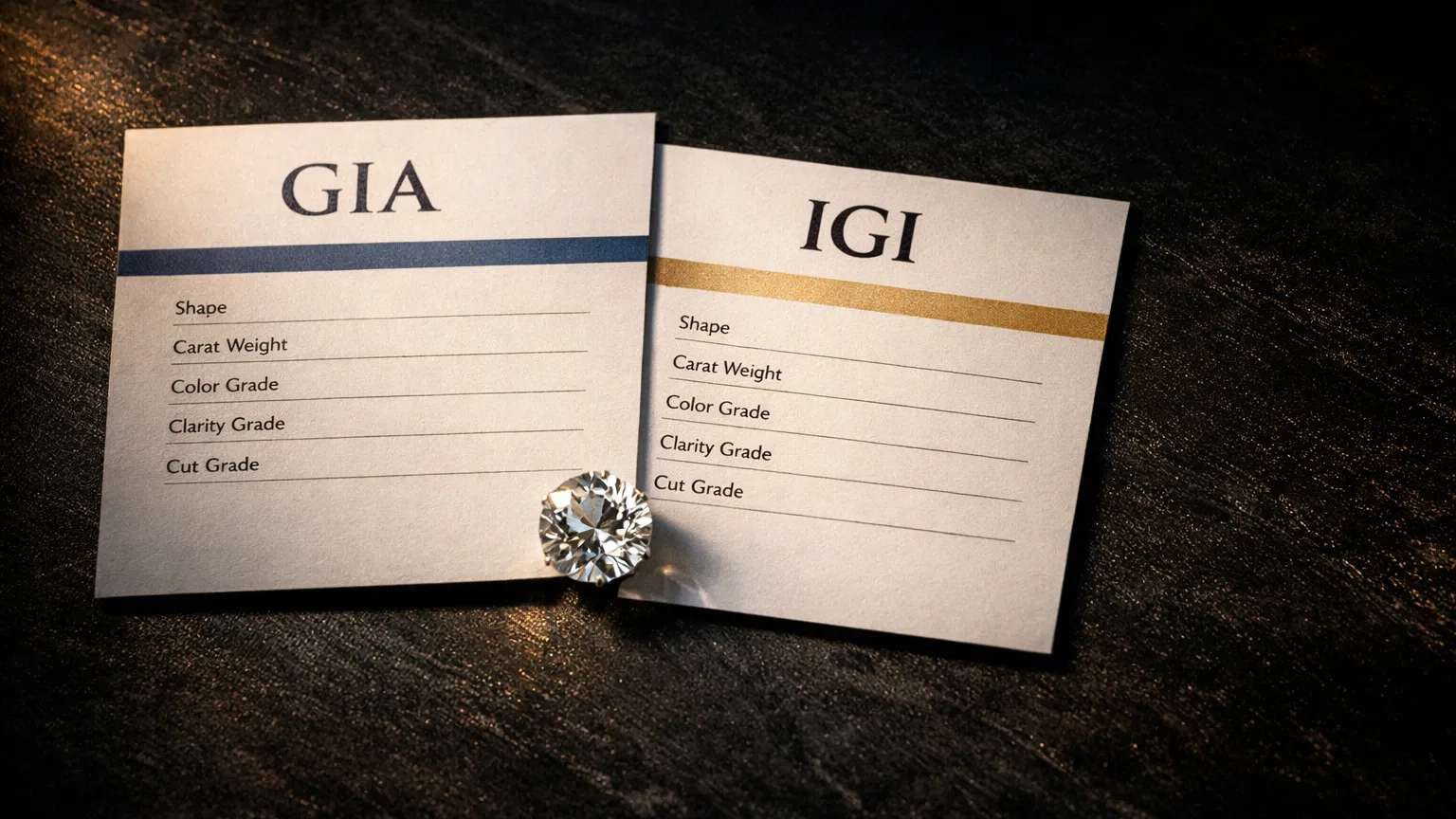
The gia vs igi question used to be a debate about strictness. In 2026 it is a pricing question. Which lab graded a stone now moves the segment it trades in, and the gap is wide enough that a trader who treats the two reports as interchangeable is leaving money on the table - or quoting into a loss.
How the lab landscape shifted, and why gia vs igi now matters
Through 2024 and 2025, IGI grew from a secondary name in natural diamonds to the dominant lab for lab-grown certification, while GIA formalised its own lab-grown programme with a distinct report format. The consolidation was supposed to simplify the market. In practice it created two parallel pricing tracks.
On the natural side, a GIA report still anchors the premium tier - a G VS1 round on GIA paper trades tighter to high bid than the same stone on an IGI report, because the buyer universe is larger and the resale path is cleaner. The spread is not cosmetic. On comparable stones in the 0.90–1.20ct range, the trade-observed gap between the two labs has widened rather than narrowed over the last year.
On the lab-grown side, the picture inverts. IGI carries the volume, GIA carries the report that closes a sale into a jeweller who still wants GIA on the invoice. The same stone graded by both labs can land in two different price buckets, and the buckets do not overlap neatly.
Reading the report: the fields that move price
The two reports look similar at a glance. The differences that matter for pricing sit in a handful of fields. The comparison below is not exhaustive - it is the short list a trader checks before quoting.
| GIA | IGI | |
|---|---|---|
| Color grade scale | `D–Z` on every report | `D–Z`, but intermediate grades appear in the lab-grown range |
| Clarity scale | `FL` through `I3` | `FL` through `I3`, with tighter photographic plotting on lab-grown |
| Cut grade (round brilliant) | `Excellent` through `Poor` | `Excellent` through `Poor`; fancy shapes graded more often |
| Polish and symmetry | Graded on every report | Graded on every report |
| Fluorescence | `None` through `Very Strong`, with colour when medium+ | `None` through `Very Strong`; colour noted less consistently |
| Lab-grown growth method | Stated as `CVD` or `HPHT` | Stated as `CVD` or `HPHT` |
| Post-growth treatment disclosure | Disclosed on report face | Disclosed on report face |
| Report number format | 10-digit numeric | 10-digit alphanumeric, prefixed by year on some reports |
Three practical consequences fall out of that table. The clarity plotting on an IGI lab-grown is often more granular than the GIA equivalent, which helps at the edge of a grade. Fluorescence is graded on both but the colour-of-fluorescence note - the line that matters for a blue-fluor D–F stone - is more consistently present on GIA. And the cut grade on fancy shapes is still the single field most likely to swing a price, regardless of lab; if the report has no cut grade, treat the stone as cut-grade Good until proven otherwise.
None of this replaces the report itself. For the structure of what a certificate contains and why, see Certification & Lab Grading. For how grade differences flow through to a quoted price, Reading Rapaport without being misled by it walks through the translation.
Practical reading when sourcing or pricing
When a stone arrives for pricing, the lab on the report changes three things: which comparable set to use, how tightly to quote against the printed grade, and how much to discount for grade drift risk on resale. A GIA natural gets the tightest quote against the printed grade because the buyer universe believes the grade. An IGI natural of the same spec gets a wider spread - not because the grade is wrong, but because the resale path has to absorb the lab discount. A GIA lab-grown gets a small upcharge versus its IGI twin in the same size bucket, driven by buyers who need GIA on the final invoice.
The cleanest way to use this is to treat the lab as a sixth C alongside carat, colour, clarity, cut and fluorescence. Price each combination on its own, against real transaction data in that lab's segment - not against a generic benchmark that averages the two labs into a single number. If the platform shows a G VS1 EX/EX/EX round on both labs, the two prices are not meant to match; the spread between them is the signal. For how far that spread actually moves the number on a same-spec stone, see GIA certificate pricing: how much does the report change the quote?.
The shift is not finished. Expect further movement as lab-grown volumes consolidate and as buyers push back on paying the GIA upcharge on stones they intend to mount and never resell. For now, read the lab first, then the grade.